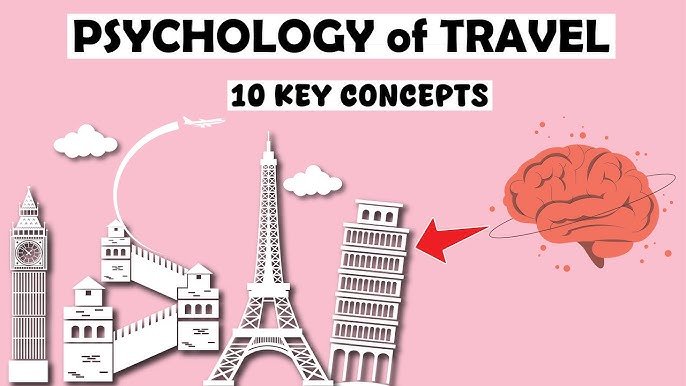
Exploration has always been one of the most compelling mechanics in video games. Whether players are discovering hidden areas in open-world adventures or uncovering secrets in role-playing games, exploration taps into powerful psychological drives that mirror real-world travel experiences. Game designers often replicate the motivations that make people want to visit new places, wander unfamiliar environments and seek out meaningful discoveries.
The reason this connection feels so natural is that both gaming exploration and real-world travel are driven by similar psychological forces: curiosity, reward and the desire to understand new environments.
Curiosity and the Drive to Discover
One of the most important psychological motivations behind both gaming and travel is curiosity. Humans have a natural tendency to explore unfamiliar environments simply to learn more about them. Researchers describe curiosity as an intrinsic motivation that pushes people to seek new information and experiences even when there’s no immediate practical reward.
Game developers intentionally design environments to trigger this instinct. Hidden paths, distant landmarks, mysterious ruins, and unexplored map areas all encourage players to move forward and discover what lies beyond the next corner. In real-world travel, the same instinct pushes people to explore cities, landscapes and cultures they’ve never experienced before.
When players feel drawn to explore a digital environment, they’re essentially responding to the same psychological impulse that motivates travellers to wander through new destinations.
Reward Systems and the Brain’s Motivation Loop
Exploration mechanics in games are also closely tied to the brain’s reward system. Anticipating discovery or achievement can trigger dopamine release, a neurotransmitter linked to motivation and pleasure.
Game designers frequently use this mechanism by placing rewards behind exploration. Players might discover hidden items, new story elements, rare equipment or shortcuts. The anticipation of these rewards keeps players engaged and encourages further exploration.
Interestingly, the same reward system activates when people plan or anticipate travel experiences. Simply looking forward to visiting new places can produce a similar sense of excitement and motivation.
This shared psychological feedback loop explains why exploration mechanics feel so satisfying in games; they replicate the same emotional rewards associated with real-world adventure.
Environmental Storytelling and the Joy of Discovery
Another similarity between gaming exploration and travel lies in environmental storytelling. In many games, players learn about the world by observing details in the environment rather than being told directly through dialogue.
Ruined structures, abandoned buildings, hidden messages and subtle clues all help players piece together the history of a game world. This mirrors how travellers experience real locations. When people visit historical cities, museums or cultural landmarks, they also interpret stories through architecture, artifacts and atmosphere.
Exploration therefore becomes a form of narrative discovery. Players and travellers alike assemble meaning from what they encounter along the way.
Building Mental Maps and Spatial Understanding
Exploring both digital and physical environments requires the brain to build mental maps. As players move through a game world, they gradually learn its geography, important landmarks and safe routes. This process helps create familiarity and mastery over time. Research on exploration suggests that curiosity helps shape how people build these cognitive maps of unfamiliar environments.
The same process occurs during travel. When visiting a new city, people slowly learn its layout, remember landmarks and develop a sense of orientation. The gradual transition from unfamiliarity to familiarity is part of what makes exploration rewarding. Game worlds replicate this experience by allowing players to gradually uncover and understand their environments.
The Balance Between Risk and Discovery
Both travel and game exploration involve a balance between safety and uncertainty. Psychologists often refer to this as the ‘exploration vs exploitation’ dilemma – deciding whether to explore something new or stick with familiar choices.
Games frequently recreate this dynamic. A player might decide whether to venture into a dangerous area in search of rare rewards or stay on a safer path. Real-world travellers make similar decisions when exploring unfamiliar places, choosing whether to try something new or stick with known routes.
This tension between curiosity and caution adds excitement to both experiences.
When Digital Exploration Inspires Real Adventures
The connection between exploration in games and real-world travel can sometimes extend beyond psychology. Many players develop an appreciation for exploration itself through gaming, which can inspire real adventures.
For example, open-world games that feature vehicles or long journeys often spark interest in road trips, hiking or motorcycle touring. When enthusiasts want to bring their vehicles to new destinations for exploration, services that help you transport your car San Antonio can help move vehicles safely so riders can focus on the adventure ahead.
In this way, the sense of discovery that begins in a virtual environment can sometimes translate into real-world exploration.
The Shared Human Love of Exploration
Ultimately, the reason exploration mechanics resonate so strongly with players is simple: humans are naturally wired to explore. Curiosity, discovery, reward and learning are deeply embedded psychological drives that shape how people interact with both real and virtual environments.
Video games tap into these instincts by creating digital worlds filled with mystery and possibility. Travel offers the same experience in reality – new landscapes, cultures and discoveries waiting to be uncovered.
When players wander through a game world searching for secrets, they’re participating in a behaviour that mirrors one of humanity’s oldest impulses: the desire to see what lies beyond the horizon.