Open-world games have evolved dramatically over the last decade. Vast landscapes, detailed character models, and dynamic lighting systems are no longer reserved for major AAA studios. Today, improved tools, publicly available learning resources, and collaborative communities allow smaller teams and hobbyists to experiment with professional-level pipelines.
For gaming communities that closely follow development trends, leaks, or technical breakdowns, understanding how these pipelines work adds a new layer of appreciation. The design of environments, the structure of character rigs, and the optimization of assets all contribute to the smooth, visually rich worlds players enjoy.
The Foundations of a Modern 3D Game Pipeline
A 3D asset pipeline is the structured process through which raw ideas become optimized in-game elements. It involves multiple stages, each requiring specific tools and workflows.
Concept Art and Visual Direction
Every asset begins with a concept. Artists sketch characters, environments, or props while defining color palettes, materials, and silhouettes. These designs guide modelers and texture artists, ensuring consistency across the project.
In large open-world titles, consistency is crucial. Terrain elements, architecture, and foliage must feel like part of the same universe even when created by different teams.
Modeling and Sculpting
Once the concept is approved, artists build the 3D model. High-poly sculpting tools allow for intricate detail, from fabric folds to surface damage. However, high-poly meshes are rarely used directly in games because they are too performance-intensive.
Instead, artists create a low-poly version and bake details from the high-poly model into textures such as normal maps and ambient occlusion maps. This approach preserves visual quality while maintaining performance.
Asset Libraries and Resource Management
As projects grow, managing assets becomes a challenge. Teams must track versions, maintain consistent naming conventions, and ensure compatibility between tools and engines.
A growing number of developers and hobbyists rely on curated asset libraries to speed up production. Platforms that allow creators to download assets for game development provide models, materials, and environment packs that can be customized or studied to learn professional workflows.
Using these resources effectively requires understanding topology, UV mapping, and shader setup. Even pre-made assets often need adjustments to match a project’s art style or performance targets.
Why Asset Optimization Matters
Optimization is one of the most critical stages in the pipeline. Large environments can contain thousands of objects, each consuming memory and processing power.
Developers use techniques such as:
-
Level of Detail (LOD) models
-
Texture atlases
-
Occlusion culling
-
Instancing for repeated objects
These strategies ensure that only necessary geometry and textures are rendered at any given moment, allowing large worlds to run smoothly even on modest hardware.
Texturing and Materials in Stylized Worlds
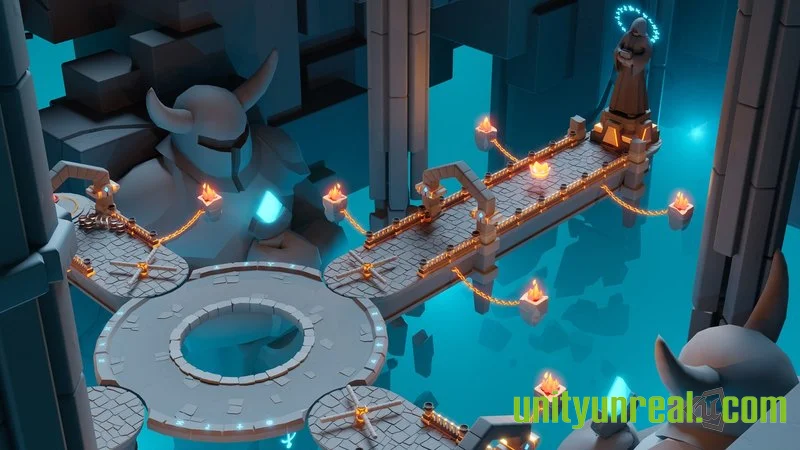
Stylized games present unique challenges compared to realistic titles. Instead of replicating real-world materials, artists must design textures that match the artistic direction while remaining readable at different camera distances.
Hand-Painted vs. Physically Based Rendering
Two common approaches dominate modern workflows:
-
Hand-painted textures focus on artistic control and strong color gradients.
-
Physically Based Rendering (PBR) uses realistic material values for lighting accuracy.
Many games blend these approaches, using PBR for lighting consistency while maintaining stylized color and shading.
Lighting and Environment Design
Lighting defines mood and depth in a 3D scene. Open-world games often combine baked lighting with real-time effects to balance quality and performance.
Global Illumination Techniques
Global illumination simulates how light bounces between surfaces. Modern engines provide tools to precompute this lighting, reducing runtime cost while preserving realism.
Dynamic weather and day-night cycles add complexity. Artists must ensure environments look natural under multiple lighting conditions, which often requires testing scenes repeatedly with different skyboxes and exposure settings.
Animation and Rigging Workflows
Characters feel alive through animation. Rigging involves building a digital skeleton and defining how a mesh deforms when bones move.
Reusable Animation Systems
To save time, developers create animation libraries that can be reused across multiple characters. Motion blending and procedural animation systems allow smooth transitions between walking, running, and combat actions.
In large projects, animation teams collaborate closely with gameplay programmers to ensure timing and responsiveness meet design goals.
The Role of Technical Artists
Technical artists bridge the gap between art and programming. They create shaders, automate workflows, and solve performance bottlenecks without sacrificing visual quality.
For example, a technical artist might:
-
Develop shaders that simulate water or fabric
-
Build tools that batch-process textures
-
Optimize particle systems for large battles or environmental effects
This hybrid role has become essential as visual expectations continue to rise.
Community Contributions and Modding
Gaming communities increasingly participate in content creation. Modding tools, asset viewers, and data analysis projects allow fans to explore game files, study design techniques, and create their own content.
Learning Through Reverse Engineering
By examining models and textures, aspiring artists can learn how professional assets are structured. This includes:
-
Polygon distribution
-
Texture resolution choices
-
Material layering techniques
These insights often inspire independent projects and fan-made environments.
Challenges in Large-Scale Open Worlds
Creating expansive environments introduces technical challenges beyond asset creation.
Streaming and Memory Management
Large worlds cannot load everything at once. Instead, engines stream assets in and out of memory based on player location.
This requires careful planning of asset sizes, terrain segmentation, and loading zones. Poor streaming systems can lead to visible pop-in or stuttering.
Maintaining Artistic Consistency
When dozens of artists contribute to a single environment, maintaining a cohesive look becomes difficult. Art directors establish guidelines for:
-
Color temperature
-
Material roughness ranges
-
Architectural motifs
These standards ensure every new asset fits seamlessly into the world.
The Future of Real-Time Graphics
Real-time rendering technology continues to evolve. Features such as hardware ray tracing, procedural generation, and AI-assisted tools are changing how artists work.
Procedural Content Generation
Procedural systems can generate terrain, vegetation, or even entire cities. Artists then refine these results, combining efficiency with creative control.
This hybrid approach reduces repetitive work and allows teams to focus on storytelling and unique visual elements.
AI-Assisted Workflows
AI tools are beginning to assist with:
-
Texture generation
-
Upscaling low-resolution assets
-
Automating retopology
While these tools do not replace artists, they can significantly speed up early production stages.
Conclusion: Understanding the Craft Behind the Worlds
Behind every immersive game world lies a complex pipeline of concept art, modeling, texturing, lighting, animation, and optimization. Each stage requires both artistic skill and technical knowledge.
For players and enthusiasts, learning about these processes transforms the way games are experienced. Environments become more than scenery; they become the result of careful design decisions, performance trade-offs, and countless hours of iteration.
As tools continue to improve and communities grow more involved, the boundary between professional development and passionate hobby projects will continue to blur. The next generation of creators is already learning these pipelines, experimenting with assets, and building worlds of their own.