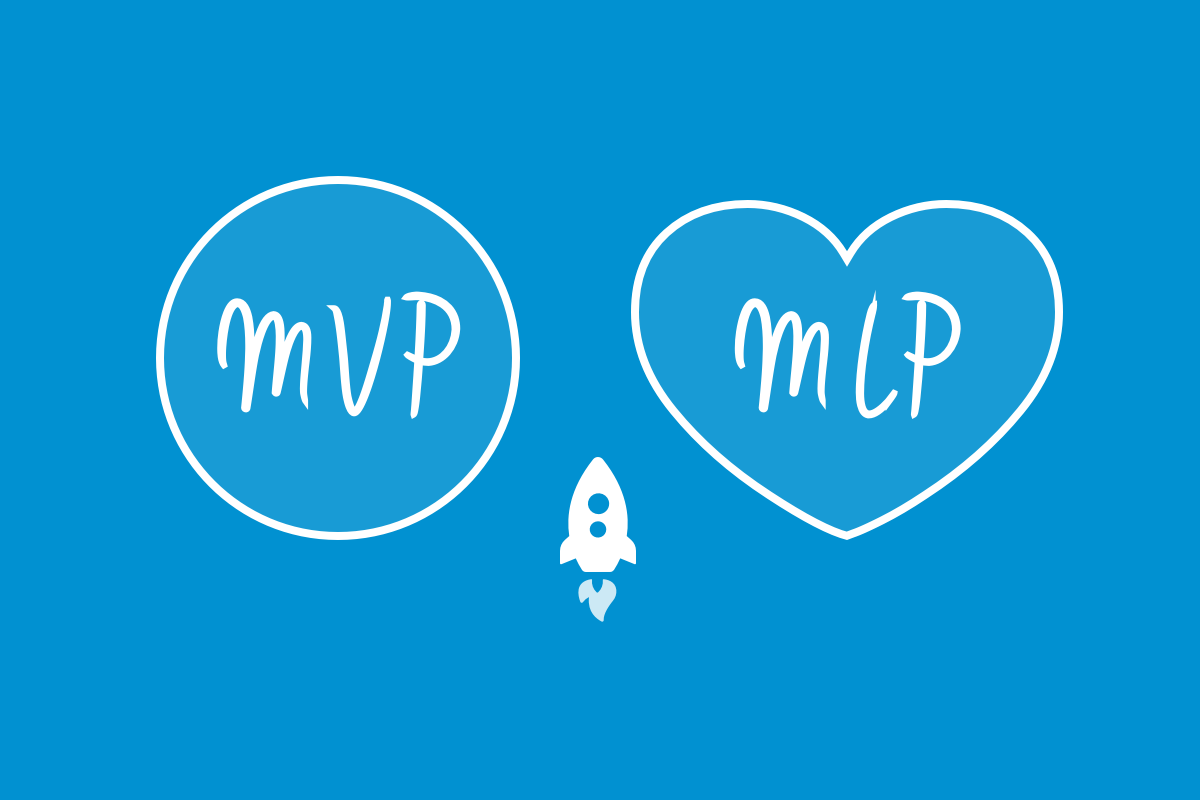
For more than a decade, the Minimum Viable Product – MVP has been the default strategy for launching digital products. Build fast, release early, learn from users, and improve later. This approach helped thousands of startups reduce risk and enter the market quickly. However, in today’s crowded digital economy, speed alone is no longer a competitive advantage. Users are overwhelmed with choices, expectations are higher than ever, and patience for poorly designed experiences is rapidly disappearing. As a result, many companies are realizing that being “viable” is no longer enough. To stand out and retain users, they are now shifting toward a new mindset: building Minimum Loveable Products (MLPs) from the very beginning.

The limits of the traditional MVP approach
The MVP framework was originally designed to reduce risk. Build quickly. Test assumptions. Learn from real users. Over time, however, many teams began treating MVP as a shortcut rather than a learning tool.
In practice, this often leads to products that are:
- Technically functional
- Poorly designed
- Difficult to navigate
- Emotionally unengaging
From a business perspective, this creates a dangerous situation. Users try the product once. They do not return. Feedback becomes shallow. Growth stalls. At that point, even strong ideas struggle to recover.
What makes an MLP different
A Minimum Loveable Product does not aim to be “perfect.” It aims to be meaningful. An MLP focuses on delivering a small set of features with exceptional clarity, usability, and reliability. Instead of asking, “What is the minimum we can build?” MLP teams ask, “What is the minimum that users will genuinely enjoy?” That shift changes every decision, from interface design to system architecture.

Why companies are making the shift
Several market realities are driving this transition.
- Rising user expectations: Users now interact daily with highly polished digital products. Even early-stage tools are unconsciously compared to platforms like Notion, Stripe, or Spotify. A clumsy experience immediately signals low credibility.
- Increasing customer acquisition costs: With paid marketing becoming more expensive, companies can no longer rely on constant acquisition. Retention and referrals have become critical. Both depend heavily on early product experience.
- Faster competitive cycles: In many industries, competitors can replicate core features within months. User experience and emotional attachment are often the only sustainable differentiators.
The hidden cost of “Fixing it later”
Many founders assume they can improve the experience after validating demand. In reality, this is rarely simple. Poor early design decisions create technical debt. Inconsistent UX creates user confusion. Negative first impressions reduce future adoption. By the time companies attempt to rebuild, trust is already lost. MLPs reduce this risk by embedding quality from the start.
How successful teams build lovable products early
Companies that consistently deliver strong early products tend to share three practices.
- They invest in product discovery: Before writing code, they validate user behavior, not just feature requests. They observe workflows, test prototypes, and refine assumptions.
- They prioritize cross-functional collaboration: Design, engineering, and business teams work closely from day one. Decisions are made holistically, not in isolation.
- They work with experienced product partners: Many startups and enterprises collaborate with development partners who bring both technical expertise and product thinking.
Firms such as PowerGate Software, for example, support clients in transforming early concepts into scalable, user-centered products by integrating UX strategy, system architecture, and business objectives from the outset. This approach helps teams avoid common early-stage mistakes while maintaining development speed.

When MLPs create the most value
MLPs are particularly effective in:
- SaaS platforms
- Fintech and healthcare products
- Marketplace solutions
- B2B tools with complex workflows
In these environments, trust and usability directly influence adoption. A loveable first version often determines long-term success.
The transition from MVPs to Minimum Loveable Products reflects a broader evolution in product strategy. Speed alone is no longer a competitive advantage. The feature volume is no longer impressive. What matters is how users feel when they interact with a product for the first time. MLPs recognize that emotion, usability, and reliability are not “extras.” They are core business assets. For companies building digital products in today’s crowded markets, that mindset is quickly becoming essential.
Contact PowerGate Software:
- Website: https://powergatesoftware.com/
- Services: https://powergatesoftware.com/services/
- LinkedIn: https://www.linkedin.com/company/powergatesoftware-company
- Email: contact@powergatesoftware.com